HHF Valve Body Forgings: 4330V MOD Steel and Mechanical Requirements
HHF Valve Body Forgings: 4330V MOD Steel and Mechanical Requirements
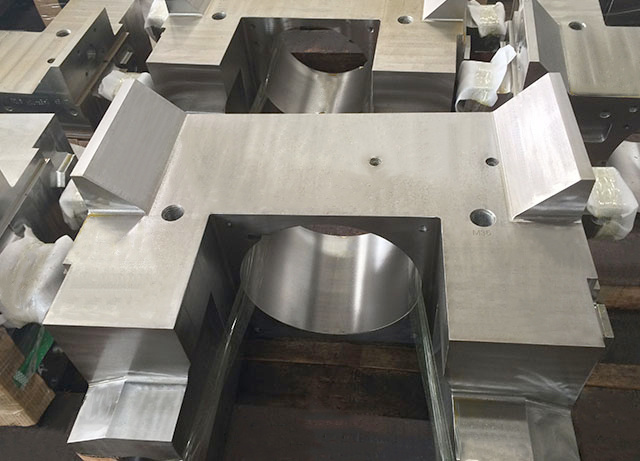
A valve body is more than a housing for internal components. Its walls, openings, connection faces and internal cavities have to work together as part of the assembled equipment. When the component is made from a large forging, material selection and the subsequent machining process both deserve attention.
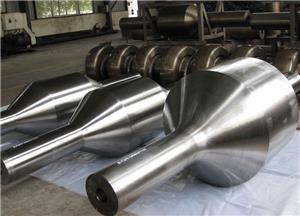
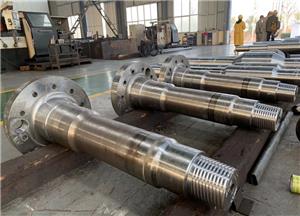
Henan Zhongyuan Heavy Forging Co., Ltd. (HHF) manufactures large precision forgings for industrial equipment. Its valve body product range includes components with substantial cross-sections and complex machined features. For this type of part, the material specification needs to be established before the manufacturing route and inspection requirements are finalized.
HHF's supplied technical data for this valve body list 4330V MOD alloy steel. The specified composition includes 2.0–3.0% nickel, 0.80–1.10% chromium and 0.40–0.65% molybdenum. Vanadium is controlled within 0.05–0.15%, while carbon ranges from 0.28% to 0.37%. The maximum phosphorus and sulfur contents are both 0.015%.
The composition figures provide the limits against which the material can be checked. For a forged valve body, however, chemical composition is only one part of the specification. The required mechanical properties and the condition of the finished component also need to be considered in relation to the approved drawing and applicable acceptance criteria.
The listed minimum tensile strength is 1,033 MPa in both the transverse (T) and longitudinal (L) directions. Minimum yield strength is 964 MPa for both orientations. The other reported properties show directional differences: elongation is at least 10.7% (T) and 15% (L), while reduction of area is at least 32% (T) and 45% (L). The specified impact energy is at least 90 J in the transverse direction and 50 J in the longitudinal direction.
In the end, these values offer numerous points of discussion for the engineering and procurement team regarding the material specification. Tensile and yield strengths relate different kinds of mechanical behaviors but together with elongation, reduction of area and impact energy give additional details. The transverse and longitudinal results have to be assessed separately and compared with the actual requirements of the given component.
The making difficulty continues after the forging achieves its target form. Valve bodies are capable of having intersecting openings, recessed areas, mounting faces and joining features which are supposed to fit to the opposite parts. Besides considering the material and heat treatment requirements, machining allowances, dimensional accuracies and inspection access have also to be taken into account. The exact measures will vary from one component drawing to another and its intended use.
HHF has several production divisions like the ones responsible for forging, heat treatment, petroleum equipment, machining and electroslag remelting. Additionally, HHF's facilities include a physical and chemical testing lab as well as a range of technical research. These various operations allow HHF to effectively carry out major forging works and handle industrial equipment parts.
For buyers sourcing forged valve bodies, a clear technical specification is a practical starting point. Material grade, required mechanical properties, finished dimensions, machining scope and inspection documentation should be agreed before an order enters production. This gives the manufacturer and purchaser a common basis for evaluating the finished part against the project requirements.