Why Precision Mandrels Remain Critical in Heavy Machinery Manufacturing
As industrial equipment continues to move toward higher speeds, tighter tolerances, and greater production efficiency, the demand for precision-machined core components has grown significantly. Among these components, the mandrel remains one of the most important yet often overlooked elements in large-scale machinery systems.
From steel processing lines and paper manufacturing equipment to mining machinery and heavy-duty winding systems, mandrels play a key role in maintaining stability, supporting rotating loads, and ensuring consistent production performance.
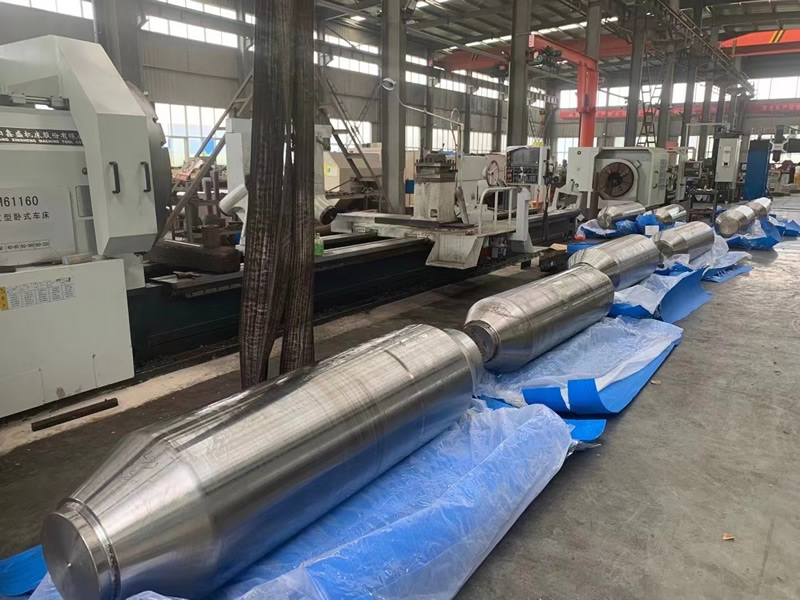
Growing Demand for Large Precision Machined Components
Modern industrial equipment is expected to operate continuously under demanding conditions. Manufacturers are seeking components capable of handling higher loads, faster rotational speeds, and longer service intervals without compromising accuracy.
As a result, precision machining requirements for large machinery parts have become increasingly stringent. Components such as mandrels, shafts, rollers, and spindle assemblies must achieve excellent dimensional accuracy, balance performance, and surface quality to meet modern production standards.
For industries where downtime directly impacts productivity, the reliability of these critical components can significantly influence overall operational efficiency.
The Function of Mandrels in Industrial Machinery
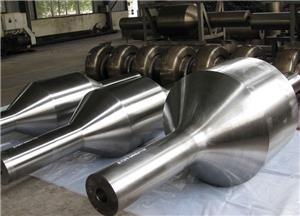
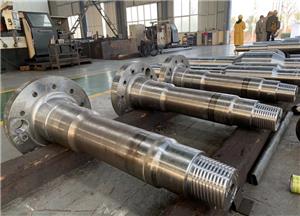
A mandrel serves as a supporting and positioning component in many industrial systems. Depending on the application, it may be used to hold, guide, wind, expand, or support materials during manufacturing processes.
In steel coil processing equipment, mandrels are commonly used to support and secure heavy coils during winding and unwinding operations. In paper and film production lines, they help maintain proper material tension and alignment throughout the process.
Because these components are frequently exposed to substantial radial and axial loads, precision manufacturing becomes essential to ensure stable operation and minimize vibration.
Even minor dimensional deviations can affect equipment performance, leading to increased wear, reduced efficiency, or unexpected maintenance requirements.
Precision Manufacturing Challenges
Producing large mandrels presents unique machining challenges compared to standard mechanical components.
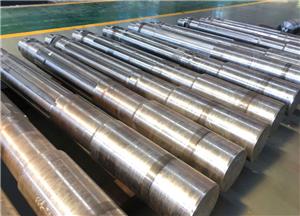
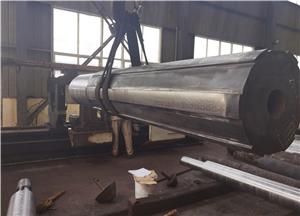
Large dimensions require advanced turning equipment capable of maintaining tight tolerances over extended lengths. Material selection also plays an important role, as the component must provide sufficient strength while resisting fatigue, deformation, and wear during long-term operation.
In many applications, concentricity, straightness, and dynamic balance become critical quality indicators. Achieving these requirements often involves multiple machining stages, precision measurement procedures, and comprehensive quality inspections.
As equipment sizes continue to increase, manufacturers are placing greater emphasis on process control and machining accuracy to ensure consistent product quality.
Supporting Industries Worldwide
Precision mandrels are widely used across numerous industrial sectors, including:
Steel and metal processing
Paper and pulp production
Plastic film manufacturing
Cable and wire processing
Mining and heavy equipment
Energy and industrial machinery
The versatility of these components makes them an essential part of many production systems where stability and rotational accuracy are required.
With the continued expansion of global manufacturing capacity, demand for large-scale precision machined parts is expected to remain strong in the years ahead.
Advancing Large Machinery Precision Parts Manufacturing
As industrial technology evolves, customers increasingly expect components that deliver both durability and precision. Manufacturers are investing in advanced machining centers, inspection equipment, and quality management systems to meet these expectations.
For precision mandrels and other large machinery components, success depends not only on machining capability but also on engineering expertise, material control, and strict manufacturing standards.
By combining precision engineering with reliable production processes, modern manufacturers can provide high-performance mandrels that support efficient and dependable operation across a wide range of heavy industrial applications.
As a key member of the Large Machinery Precision Parts Series, the mandrel continues to play a vital role in helping industrial equipment achieve greater productivity, accuracy, and long-term reliability.