HHF Mining Stabilizers: 4330V MOD Steel and Manufacturing Requirements
HHF Mining Stabilizers: 4330V MOD Steel and Manufacturing Requirements
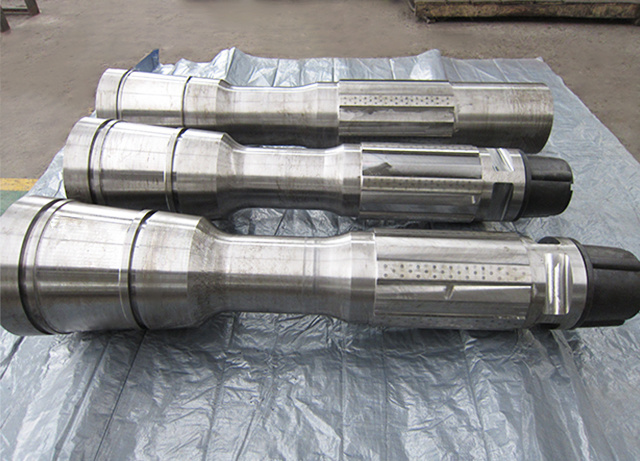
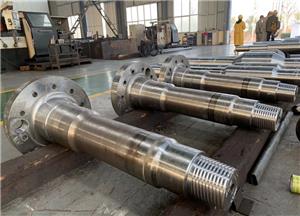
A stabilizer for mining drilling equipment not only has to meet the strength requirements but the design must also be such that it can fit into the drilling string. The dimensions, connection parts and machined faces of its body are meant to mate with similar components and the steel chosen must have the mechanical properties of the finished tool.
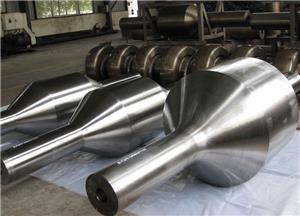
Henan Zhongyuan Heavy Forging Co., Ltd. provides drilling equipment for mining and oilfield applications which include reverse circulation drilling system stabilizers. The material of the product is 4330V MOD alloy steel.
The alloy consists of 2.0–3.0% nickel, 0.80–1.10% chromium and 0.40–0.65% molybdenum. The vanadium content is 0.05–0.15% and carbon is kept at 0.28–0.37%. Manganese levels are between 0.45–0.65%, whereas phosphorus and sulfur are restricted to 0.015% maximum each.
As part of the material requirements, the limits of chemical composition of the alloy are defined. A manufacturer of mining stabilizers complying with the specified composition is able to make a product that meets the technical documentation. The final conformity is also based on the manufacturing processing, heat treatment and examination to which the component is subjected.
The High Hardness Ferrium (HHF) material specifies a minimum tensile strength of 1,033 MPa (N/mm2) and the least value for the yield strength was 964 MPa in both cross- and along the grain directions. Mechanical property values differ with the direction.
Minimum elongation of 10.7% (T) and 15% (L), respectively. Also, the reduction of area is at least 32% (T) and 45% (L). The Charpy impact energy requirement is a minimum of 90 J in the transverse direction and 50 J in the longitudinal direction. The hardness of the material is 320–360 HB according to specifications.
Sole strength figures will never be enough for engineering teams that want to make the best use of a mining stabilizer in terms of material choice. The different properties measured along and across the grain direction are also important in the selection of a suitable material for the design requirement. However, one should not interchange these numbers.
Material choice is only a step in production. Stabilizers also require the specification for connection details and dimensions.
Depending on the project, clients/buyers may want to verify machining allowances, heat treatment, inspection methods, acceptance criteria, etc., after receiving quotation but before the commencement of production.
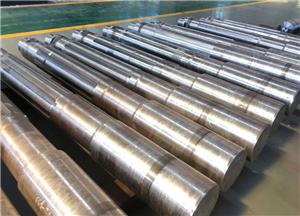
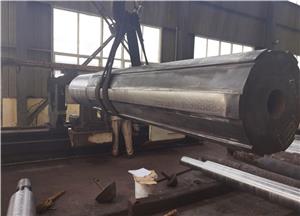
HHF's manufacturing operations, in which forging, heat treatment, petroleum equipment, machining, and electroslag remelting constitute part of, have a well equipped laboratory for physical and chemical testing as well as technical research and development areas. Through its extensive manufacturing base, it is possible for HHF to make various drilling tools and very accurate forgings for different customer applications.
Mining equipment manufacturers and drilling contractors will find the HHF's specification of 4330V MOD material a reliable document at the beginning of any technical discussion. It is important that before placing the order, the product drawings, dimensions, and methods of inspecting are confirmed so that both the material and the component specification are well laid out.