Why Precision Forged Rolls Are Essential for Modern Rolling Mills
Steel mills are always trying to become more productive while keeping the quality of the material and the product within tight limits. As the rolling techniques progress, the manufacturers are not only spending on the newer and faster rolling machines but they are also focusing on the parts that play a great role in the performance of the production line.

This is the case with the forged rolls that are one of the most crucial parts after a long time of usage. Every time you are reducing the thickness of a material, you are depending on the roll's accuracy, strength and durability. When your roll can maintain the same surface quality and dimension with the same strength of material that you are using you will not have to change it as quickly.

Every Mill Depends on Roll Performance
To that end, steel mills that operate under very rough conditions can easily get damaged. Because all of these conditions - very high forces on the surfaces, friction, high heat, and repetitive work load combine to create the highest stress situation, any one point of failure is going to be an issue.
This situation results in the fact that contemporary manufacturers of steel, who have a lot of rolling mills, consider forged rolls as high precision components rather than just wear parts with a lifespan which they change.
Being certain that your rolled products are consistently made to a high standard will definitely minimize the time you're standing idle and the time you get your product from the rolling mill, while also minimizing the number of rejects you will get.

Material Selection Shapes Service Life
Rolling is a process that can vary the demands for material properties quite a lot.
Cold rolling calls for a very high degree of surface hardness and resistance to abrasion which together ensure that the dimensions do not deviate over the long-run.
On the other hand, hot rolling involves materials that can endure repeated cycles of heat and can also resist fatigue and large temperature changes.
The choice of materials for forge rolling will depend on the working conditions. Forge rolling rolls can be made of alloy steels like 9Cr2Mo, 86CrMoV7, MC3, MC5, 70Cr3Mo, to name a few. Each steel type is chosen and used in accordance with rolling application.
The selection of the right material will allow a manufacturer not only to get hardness but also toughness, thermal resistance to change over time, and long service life.

Precision Manufacturing Beyond Forging
Producing a large forged roll is much more complex than just changing the shape of the material.
It is an integrated production system involving not only rolling, heat treatment, rough and fine machining operations, a few rounds of grinding as well as, of course, inspection and measuring of the final product before it is delivered.
The main factors like roundness, concentricity, straightness, the surface finish, and the hardness profile along with other technical features which affect the performance and quality of the final product must be precisely controlled and managed during the manufacturing process. It is the quality that the customer sees in final product which matters.
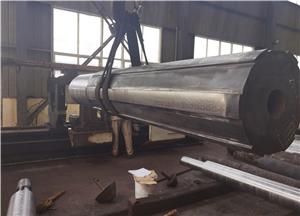
To handle the production of rolls that can be several meters in length and also keep up those standards of dimensions and surfaces a good understanding of the production process and experienced teams will go a long way. You must have high-tech equipment for machining, besides skilled workers who are able to manage the entire process with large rolled products and forge rolls.
The only way that you can be sure that each roll can perform well under the harshest conditions of a production environment after being installed, is by implementing a consistent process control strategy.
Serving Multiple Rolling Applications
Forged rolls are widely used throughout modern metal processing industries.
Typical applications include:
Cold rolling mills
Hot rolling mills
Plate mills
Strip production lines
Section rolling mills
Straightening equipment
Pipe manufacturing
Non-ferrous metal processing
Each production line has unique operating requirements, making customized roll design and material selection an important part of achieving long-term performance.
Zhongyuan Heavy Forging's Manufacturing Capability
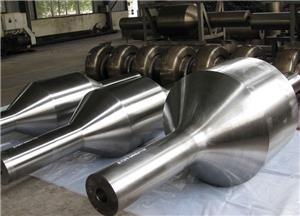
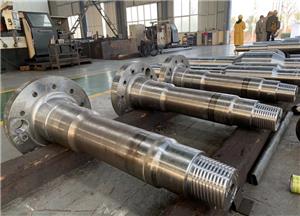
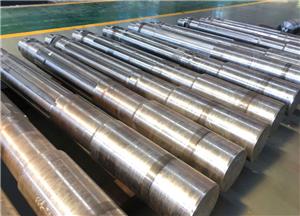
Zhongyuan Heavy Forging can offer a full set of forged rolls, which are suitable for heavy industries: work rolls; intermediate rolls; backup rolls; hot rolling rolls; straightening rolls.
With its large-scale forging equipment, advanced heat treatment, precision machining centres, and rigorous quality inspection and control systems, the company is able to manufacture forged rolls according to the clients' drawings and technical specifications.
The material grade, size, heat treatment, and surface condition of forged rolls can all be adjusted and matched to the customer's specific production process and requirements.
Built for Long-Term Production Reliability
Every hour on the factory floor is a battle to increase production in the steel business.
Forged products of top quality not only give you the same product quality throughout the entire batch but at the same, they also make you perform less maintenance and thus save money in the long run with less machine break-downs.
To stay competitive in the industry one must have forged products at their best. For this Zhongyuan Heavy Forging, through the combination of state-of-the-art forging technology, highly accurate machining, and a comprehensive quality control system, consistently delivers the high-quality forged products needed to keep the production lines rolling and the customers happy.