HHF Details Non-Magnetic Steel Grades for Drilling Tool Manufacturing
HHF Details Non-Magnetic Steel Grades for Drilling Tool Manufacturing
Steel that is used for the fabrication of drill bits that do not require a magnetic response is referred to as non-magnetic steel. These steels must satisfy certain criteria in terms of their chemical makeup, mechanical properties and resistance to impact. In addition, one has to find a material that will be compatible with the size and environmental conditions of the component at the end of development.
The Henan Zhongyuan Heavy Forging Co., Ltd. (HHF) supplies non-magnetic steels in three variations namely W-1, W-2 and W-3. These steel grade specifications contain details of the ranges of their chemical components and mechanical properties. They are meant to be a technical reference for drill tool manufacturers who want the correct information about the material to use for production of a drill tool.
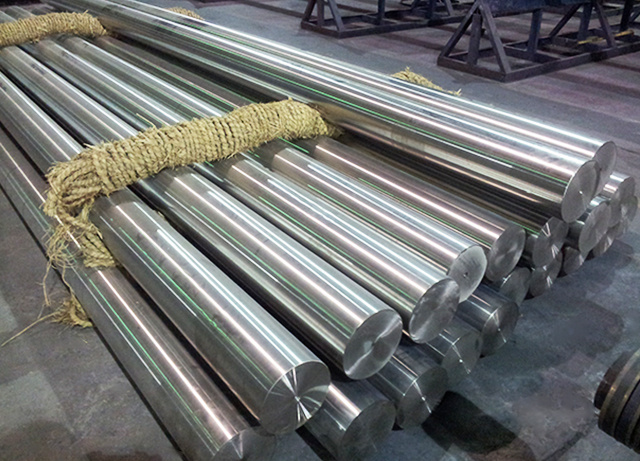
Three Grades, Different Material Requirements
Although W-1, W-2 and W-3 seem similar, their carbon, chromium, manganese, molybdenum and nitrogen levels vary slightly. That is why each grade's mechanical properties differ and the grades cannot simply be substituted for each other.
The maximum carbon content of W-1 is 0.08%, whereas both W-2 and W-3 have a maximum of 0.03% carbon content. Chromium content ranges from 13.5-16.5% in W-1 and 13-16% for W-2, whereas the range for W-3 is much higher at 16.5-18.5%. W-3 is specified with the maximum range of nitrogen content at 0.50-0.80%, which is significantly higher compared with W-1's lower range of 0.25-0.40%. and even W-2 with a range of 0.30-0.45% nitrogen.
From the perspective of the material buyer, such compositional variation makes the grade selection to a great extent determinant of the material specification. One should not consider the three grades as the ones with similar properties just because they look like one another but rather one should study together the chemical composition, the strength needed, and size of the end product.
Mechanical Properties Across Different Diameters
Our HHF catalog of mechanical requirements has a wide outside diameter range of materials from a minimum of 79.4 mm up to a maximum of 279.4 mm.
As an example, strength values are different for grade W-4 when selecting from diameter range 79.4 – 114.3 mm, 114.3 – 152.4 mm and finally the large size 152.4 – 203.2 mm. The values also change for W-5 according to the same classification of diameter ranges. Therefore, the buyer needs to specify the diameter of the tubing and the grade together in the request for quotation to avoid any confusion and to get the correct delivery.
For products ranging at an outer diameter of 79.4–174.6 mm, the respective yield strengths in terms of strength (minimums) are listed for different types (W1-W3); thus, the minimum for each one is 758 MPa for W-1, 827 MPa for W-2, 965 MPa for W-3. The accompanying minimum values for tensile strength are respectively 827 MPa, 896 MPa, and 1,034 MPa.
Moreover, the specifications have published values for elongation, Charpy impact energy at 21°C and -25°C, besides Brinell hardness. The listed property values offer further means to assess material performance from the standpoint of mechanical loads and service conditions.
Corresponding Brinell hardness (HB) values are 285-400, 285-365, and 300-400.
If a particular steel grade is selected for a given product application, then all the relevant factors such as the composition, the mechanical behavior of the specified material, and the dimensional requirements must be verified to ensure that they will meet the application’s requirement.
Supporting Oilfield Equipment Manufacturing
Non-magnetic steel is the preferred material for the manufacture of oilfield drilling components where magnetic properties are a significant factor in the equipment design.
Selection of materials therefore requires the evaluation of factors other than just strength.
HHF has production areas for forging, heat treatment, petroleum equipment, machining and electroslag remelting. The company laboratory of physical and chemical testing together with its research center contribute to the technical expertise of HHF and manufacturing support of petroleum equipment and large precision forgings.
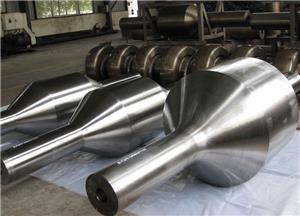
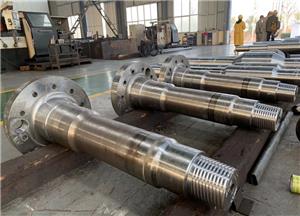
Non-magnetic steel is produced by HHF in parallel with drilling tool stabilizers, non-magnetic stabilizers, drill collars, non-magnetic drill collars and other petroleum equipment products. Such a product line enables the company to offer solutions to its clients which are both material and drilling tool related.
Technical Specifications for Procurement Review
Purchasing teams and engineering departments can minimize confusion in production planning if they check the specifications of the material to be used and determine acceptance criteria before quoting. Buyers must specify the finished component`s outside diameter, minimum yield strength, tensile strength, elongation, impact test energy, hardness and any supplementary magnetic requirements.
The W-1, W-2 and W-3 data publicly available are of particular interest for this paper review. In case a project necessitates a specific method of test, criteria of acceptance or inspection records, these requirements have to be discussed with HHF before the order is concluded.
Through the specification of different grade categories and strength in dimensions, HHF helps in technical dialogue with clients looking for non-magnetic steel for drilling equipment from the oil field and related production activities.