HHF Provides Technical Details of Milled Spiral Stabilizers for Oilfield Drilling
HHF Provides Technical Details of Milled Spiral Stabilizers for Oilfield Drilling
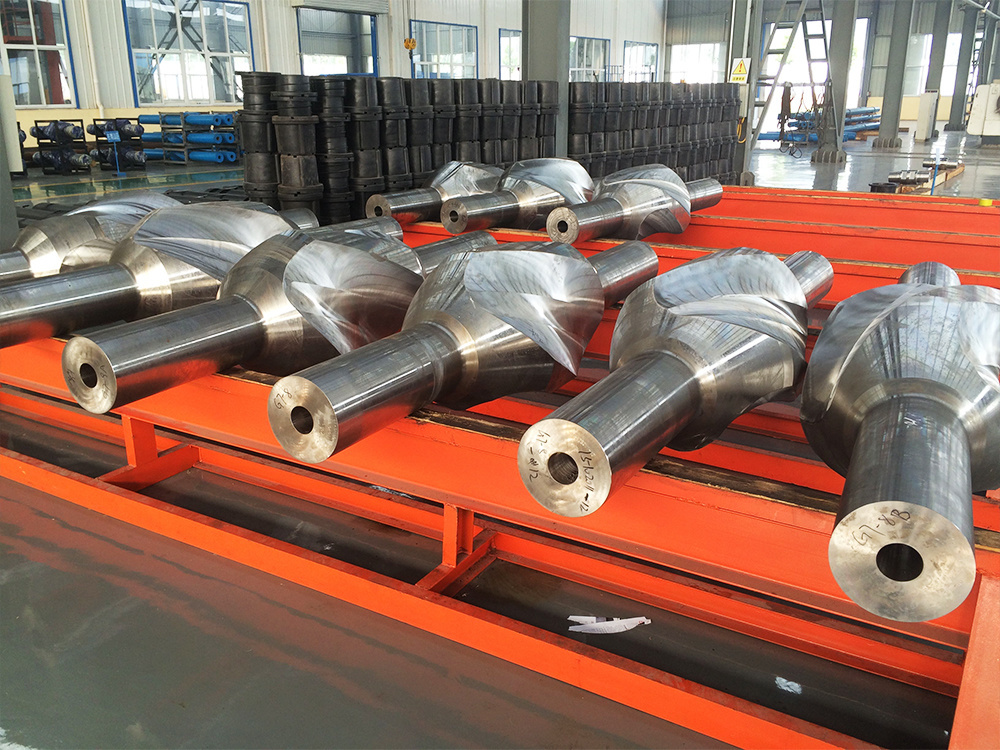
In the drilling industry, both the shape of a stabilizer and the characteristics of its base material play significant roles. Helical blades allow the tool to touch the borehole side while the steel parts have to endure the mechanical loads encountered during drilling. Because of these reasons, picking the right material is a major factor in the production of such parts for makers and drilling companies.
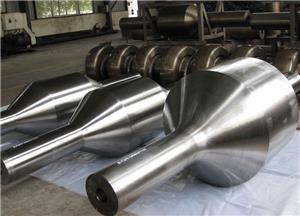
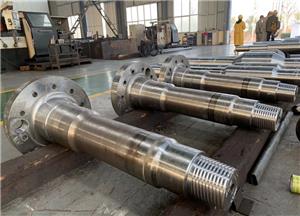
Henan Zhongyuan Heavy Forging Co., Ltd. (HHF), one of the leading companies in the field, makes various oilfield drilling equipment, including milled spiral stabilizers. The product specs of the company highlight the fact that 4145HMOD steel was selected as the base material grade of the tool, with requirements of defined chemical composition, tensile strength, hardness and impact performance.
The carbon level varies from 0.42% to 0.49%, whereas, the chromium level is 1.00-1.35% and the molybdenum level is 0.30-0.35%. Manganese content is kept in a range of 1.00-1.25%. These limits are an essential part of the specification document with which metallurgists evaluate if the steel will satisfy the mechanical requirements it is supposed to meet.
Mechanical yield strength of the material is at least 758 MPa, and tensile strength is at least 965 MPa. It can withstand deformation (elongation) of at least 13% and break down (reduction in area) of at least 45%. Brinell hardness is reported as a range of 285–341 HB. Impact energy levels according to Charpy are minimum 54 J at 20°C and minimum 30 J at -20°C.
These data points help buyers and engineering teams to evaluate the product characteristics before making a purchase of materials. While strength is one important factor, hardness, ductility and impact resistance should all be factored in simultaneously, especially if the part is going to undergo repeated loading when drilling.
Heli-coiled design of the drill tools
Besides straight-bladed design a milled spiral blade stabilizer has helical blades mounted all-around tool. This shape is used in drilling tools where the geometry and touch points of the stabilizer are to be integrated into the bottomhole assembly design through hole wall.
Choice of stabilizer ultimately is determined mainly by drilling circumstances, dimensional and operational requirements. So the blades shape, body size, materials as well as machining specifications should all be considered together rather than being viewed as individual purchasing decisions.
To help those buyers who need to source stabilizers for diverse drilling programs, verifying these specifications at an earlier stage provides technical details necessary for manufacturing and inspection.
Experience in Manufacturing of Drilling Equipment for Oilfields
Milled Helical spiral stabilizers have been the part of a broader portfolio of petroleum equipment provided by HHF company. The company is capable of forging, heat treatment, petroleum, machining, and Electroslag remelting, and is backed up by a physical and chemical testing lab and the research department.
This manufacturing process encompasses several stages essential for the production of heavily forged components and oilfield tools. For a stabilizer, the raw materials' specification constitutes only one part of the manufacturing requirements; the completed product also must fulfill dimensional, machining, and inspection criteria that have been agreed upon.
HHF publishes its specifications so that customers can refer to them when judging the company's machined spiral balancers, especially with regards to the 4145HMOD material requirements and mechanicalproperties. Specific project dimensions, acceptance criteria and inspection documentation need to be agreed upon with HHF before production commences.