HHF Roller Stabilizers: Material Specifications for Demanding Drilling Applications
HHF Roller Stabilizers: Material Specifications for Demanding Drilling Applications
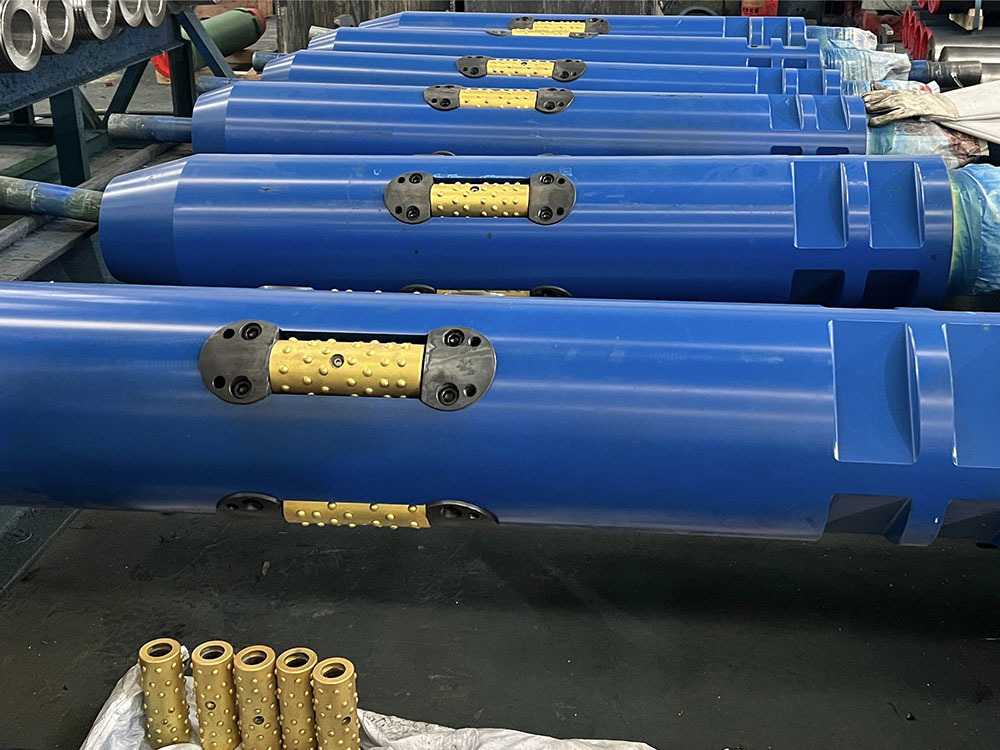
Roller stabilizers perform a different function from typical blade stabilizers. They don't just rely on sliding contact they have mounted ролики that help movement on the drill hole. The roller mechanism, main body, and properties of materials all affect tool performance under drilling loads.
Henan Zhongyuan Heavy Forging Co., Ltd. (HHF) offers roller stabilizers among its products for reverse circulation drilling. Here the type of steel is very significant part of production standards, primarily if the final product has to conform to specified levels of strength, hardness, and impact.
HHF's technical specification sheet lists 4330V MOD steel for its roller stabilizer. Beside carbon control of 0.28-0.37%, the specified composition also includes nickel, chromium and molybdenum at levels between 2.0-3.0%, 0.80-1.10% and 0.40-0.65% respectively, as well as 0.05-0.15% vanadium. The maximum permissible levels of phosphorus and sulfur are each 0.015%.
These ranges of contents will come in handy when checking whether such material is suitable for heavy-duty drilling instruments. These three, nickel, chromium and molybdenum, are among the alloy system metals specified with the rest (allowable carbon range and limits of phosphorus/sulfur contents), contributing the rest of the material specification. It is only by meeting a particular standard that the actual suitability of an item will be determined, no matter the alloy content.
According to the mechanical data, the material possesses a minimum tensile strength of 1,033 MPa in both transverse (T) and longitudinal (L) directions. It is also stated that the minimum yield strength is 964 MPa in both the material directions. The remaining material characteristics vary per direction:
Tensile properties: 10.7% elongation at fracture (T) and 15% (L), while area reduction is at least 32% (T) and 45% (L). Specified impact energy is at least 90 J (T) and 50 J (L). The hardness value is between 320 to 360 HB, as per listed.
These sets of figures for a roller stabilizer, besides the tensile strength alone, offer great insight for engineers. It makes it possible to look for any discrepancies in elongation, impact energy and also reduction of area in a certain direction when a material is being checked against the specifications of a component. Furthermore, the hardness range given must be matched to a manufacturing specification which has been agreed.
In fact, the rollers themselves are not the only parts constituting an assembled tool. Therefore, dimensions of the body, its machining as well as the type of mounting arrangement must fit to the drilling assembly the tool will operate in. As such, the requirements of materials should be considered simultaneously with the design and inspection guidelines set for the job.
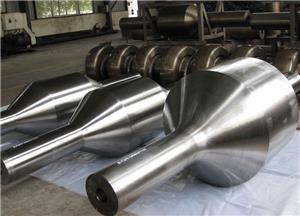
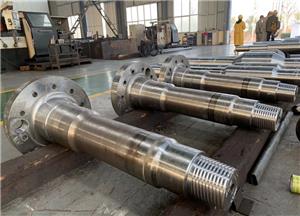
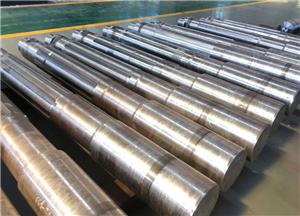
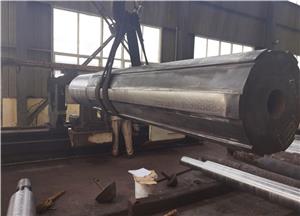
Manufacturing at HHF includes forging, heat treatment, petroleum equipment, Machining, and electroslag remelting. In addition, the company is equipped with chemical and physical analysis lab and conducts technical research. Their abilities support their broader work in oil field equipment and large precision forgings.
For clients purchasing roller stabilizers for reverse circulation drilling, the publicly released 4330V MOD document serves as an initial technical reference. Before going into production, it is necessary to check off the drawing and purchase specification the dimensions required, the criteria for material acceptance, the documents for inspection and any additional requirements specific to an individual project.