Why High-Performance Shafts Are Essential for Modern Heavy Machinery
Equipment today is getting larger and more powerful in heavy industries and at the same time, its reliability demands are increasing. Mining, steel, wind energy and marine industries, to name but a few, rely heavily on how well their critical rotating parts perform; this in turn affects their operational efficiency and equipment lifespan.
Among such components, shafts are still one of the most important parts providing support for the structure and transmitting the power in heavy machine systems.
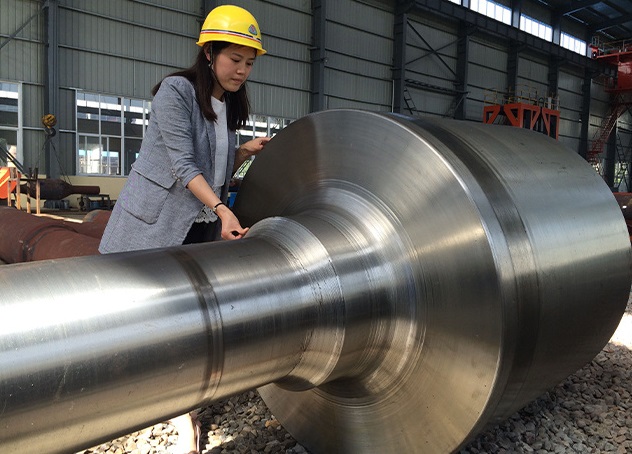
The Backbone of Rotating Equipment
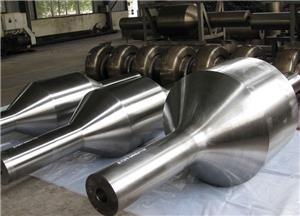
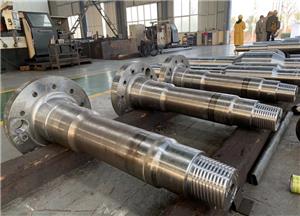
A shaft is definitely not a simple mechanical part. It is the core of a mechanical unit transmitting torque and it also acts as the support for rotating parts and maintains balance of a system when exposed to very harsh conditions.
In large industrial devices, shafts are usually exposed to very heavy loads, cyclic stress and tough working environments. A small issue with the dimension precision or the material quality level can cause a performance loss of the whole machine and even result in an expensive stoppage of the production cycle.
The manufacturers pay more attention to shaft reliability and accuracy as the scale of systems grows.
Material Performance Makes the Difference
Making a material choice is a major aspect of shaft production process.
For example, alloy steel 18CrNiMo7-6 is popular since it combines great strength, ductility, and resistance against fatigue which are required for high-load applications. It is particularly good for very big shafts where machines are in a state of heavy mechanical stress.
Through proper chemical composition and heat treatment, 18CrNiMo7-6 achieves excellent mechanical properties while staying very dimensionally stable over a long time.
It is therefore used for critical components where equipment reliability is essential.
Precision Manufacturing for Large Components
Making big shafts is not simply about cutting out steel shape via a machine.
Standard workflow for production includes forging, heat treatment, rough machining, fine machining, inspection, quality check, and delivery. Every step of it contributes to the quality of a part you are getting.
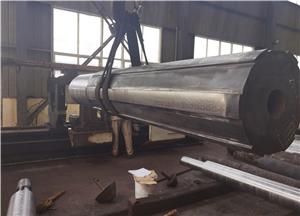
Concerning big-diameter shafts, concentricity, straightness, and surface finish should be well maintained. High-tech devices and skilled engineers help the producers to keep production tolerances at a very low level.
Extensive testing at every step makes sure a customer gets a shaft of exact dimensions and specifications.
Supporting Key Industrial Sectors
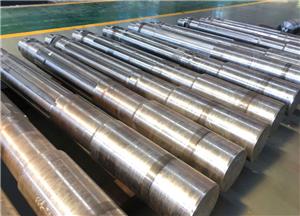
Large forged shafts are widely used in a variety of heavy-duty applications, including:
Wind power generation equipment
Mining and mineral processing machinery
Metallurgical production lines
Marine propulsion systems
Industrial gearboxes and transmission equipment
In all these fields, equipment is highly dependent on the quality of major rotating parts. Good quality shafts not only help raise the level of equipment performance but make it so that the amount of maintenance required is very low when considering the life span of the whole machine.
Manufacturing Capability Drives Quality
With projects becoming larger and customers having a higher requirement for their suppliers, a number of things must be offered like mass manufacturing and product consistency as top priority for them.
Zhongyuan Heavy Forging is constantly investing in upgrading its equipment for forging as well as machining areas and adding new inspection tools that help the company maintain very high quality standards on its products. By using high-quality raw materials, following a carefully monitored production process and developing customized designs, Zhongyuan Heavy Forging delivers the best possible products for shafts of different industry types and applications.
All through the manufacturing cycle from the moment you source the raw materials to the last quality test, there is never a moment where you can compromise on reliability, precision, and long-term performance.
Looking Ahead
Due to the fact that businesses are moving toward higher production volumes and higher efficiency per work done there will be a steady increase in the need for large precision-machined parts.
Forged shafts have always been considered an essential product in the range of parts for heavy machinery and their presence will only increase because of their contribution to the operation of heavy machines.
If you bring together high-quality materials, sophisticated ways of production, and very strict checking procedures you will be assured of an operating system that will do your work in even the harshest conditions reliably and with a minimum of breakdowns.