Why Precision Mandrels Remain Critical in Heavy Machinery Manufacturing
With the constant advancement in industrial equipment to higher speeds, tighter specifications, and increased production efficiency, an enormous surge has been noticed in the demand for precision-machined core components. Among these, the mandrel is one of the most significant yet least recognized components in massive machinery operations.
Mandrels are an essential part of industrial operations from steel-processing machines, paper-making machines to mining machinery and heavy-duty winding plants and are used for keeping things stable, holding the weights, and ensuring the quality of the production is stable.
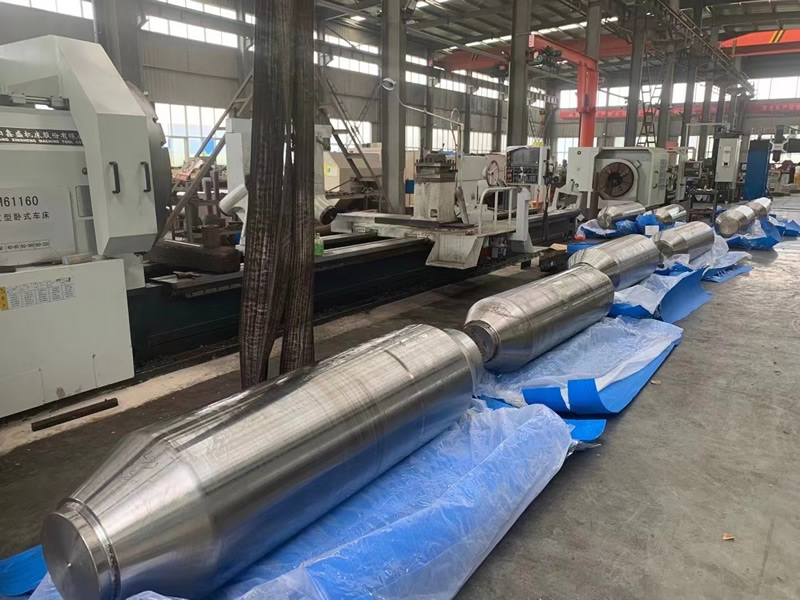
Growing Demand for Large Precision Machined Components
Modern industrial equipment is designed to operate continuously under challenging conditions such as high temperature, vibrations or harsh chemicals. As a result, manufacturers are looking for components capable of dealing with higher loads, faster rotational speeds, and longer service periods while maintaining precision.
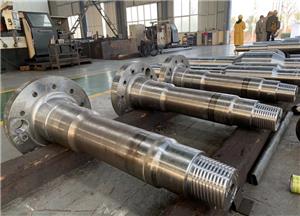
Accordingly, specifications for the precision machining of large machinery components such as mandrels, shafts, rollers, and spindle units have become much stricter. To qualify for today’s production standards, the components must have excellent dimensional accuracy, balanced performance, and surface quality.
Downtime directly affects productivity for businesses, and dependable performance of these critical components dramatically influences overall operational efficiency.
The Function of Mandrels in Industrial Machinery
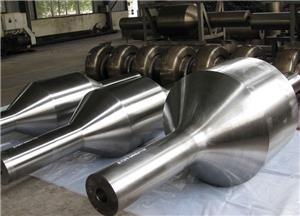
In many industrial setups, mandrels act as supporting and positioning tools. Depending on the specific job, they may be employed to hold, guide, or wind a material or even expand and support it during the manufacturing process.
On steel coil processing equipment mandrels are routinely used to handle and fixate the heavy coils during winding and unwinding.
Mandrels in paper and film production lines help to keep a material properly tensioned and aligned throughout the process.
Since these components usually experience huge amounts of lateral and axial forces, only precision manufacturing can assure smooth working and reduce vibration.
Getting even the smallest dimension wrong could mean a problem with the machine, leading to faster wear, inefficiency, or unanticipated repairs and maintenance.
Precision Manufacturing Challenges
Manufacturing large mandrels requires overcoming specific difficulties as compared to that encountered in standard mechanical parts.
Bigger sizes require heavy-grade turning equipment capable of maintaining small tolerances over long distances. The choice of material is another crucial factor since there are expectations not only from physical but also from fatigue resistance properties, i.e., the part must be able to perform without breaking or becoming worn out under the prolonged effects of the environment.
The quality attributes are different in many applications and they depend mainly on concentricity, straightness, and dynamic balance that are the main characteristics in many cases. Meeting these specifications calls for a series of production processes, precision measurement techniques, and thorough quality tests.
To keep up with continuously growing sizes of equipment, suppliers are focusing on process and machining control to maintain quality of the products consistently.
Supporting Industries Worldwide
Precision mandrels are widely used across numerous industrial sectors, including:
Steel and metal processing
Paper and pulp production
Plastic film manufacturing
Cable and wire processing
Mining and heavy equipment
Energy and industrial machinery
The versatility of these components makes them an essential part of many production systems where stability and rotational accuracy are required.
With the continued expansion of global manufacturing capacity, demand for large-scale precision machined parts is expected to remain strong in the years ahead.
Advancing Large Machinery Precision Parts Manufacturing
To the changing trends in technology, buyers are mainly concerned about products which will outlast them and are precise at the same time. Manufacturers have responded by outfitting new machine shops with precision machinery such as CMMs, the adoption of modern manufacturing and inspection standards, and building more advanced product development systems. It will lead to a high level of customer satisfaction.
The secret to success for precision mandrels and other major industrial parts is the possession of engineering capabilities along with good machining technology as well as effective control of material selection and strict manufacturing standards.
Only high-tech mandrels manufactured through a combination of precision engineering and quality-controlled manufacturing processes can offer performance levels required by heavy-duty and continuous operations on different types of industrial equipment.
As an important part of the Large Machinery Precision Parts Series, the mandrel still remains a key component that greatly contributes towards enabling productivity, accuracy, and reliability of industrial equipment over time.