Forged Alloy Steel Round Bar Supplier | 4145H, 4140, 4340, OD 100-1200mm | HHF


- HHF
- Henan
- 35-45days
- 200pcs per month
HHF forges alloy steel round bars in 4145H, 4140, and 4340, OD 100mm to 1200mm, on a 10,000-ton press with in-house National Class II lab testing for oil and gas, heavy machinery, and power generation.
Forged Alloy Steel Round Bars | 4140, 4145H, 4340 | HHF
Heavy-Duty Alloy Steel Bars for Industrial Components
When a steel bar is destined for a machined shaft, oilfield tool or power transmission component, the quality of the starting material affects every operation that follows. Machining allowance, heat treatment response and the condition of the bar's internal structure all influence whether the finished part can meet its design requirements.
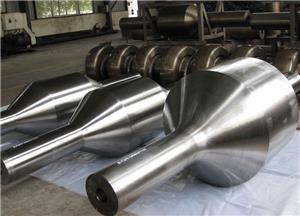
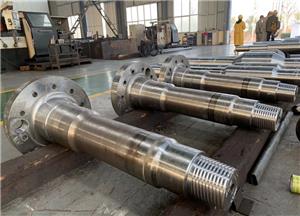
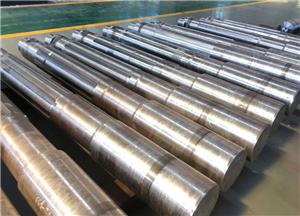
Henan Zhongyuan Heavy Forging Co., Ltd. (HHF) supplies forged alloy steel round bars in diameters from 100 mm to 1200 mm. Available grades include 4140, 4145H and 4340, with other materials considered according to the application.
Orders can be arranged around specified dimensions, material requirements and inspection criteria. For buyers who have not finalized a material grade, the intended service conditions and required mechanical properties provide a starting point for technical discussion.
What to Check Before Ordering a Forged Steel Bar
A large-diameter bar may look sound on the outside while presenting problems later in production. These problems can become apparent only after machining, quenching or the first stage of component testing.
For example, inadequate deformation during forging may leave an internal structure that is unsuitable for the intended application. Chemical segregation can contribute to variations in local properties, while inclusions may become points from which fatigue cracks develop. Incorrect heat treatment can create another set of problems, including an unsuitable hardness profile or mechanical properties outside the required range.
The inspection plan therefore needs to address more than the finished diameter.
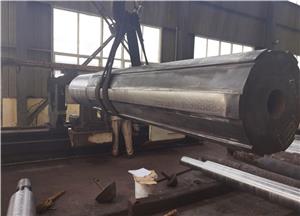
At HHF, large forgings are produced using heavy forging equipment, including a 10,000-ton hydraulic press. The manufacturing route can include forging, rough machining, heat treatment and further machining, depending on the purchase specification. Chemical analysis, mechanical testing and hardness measurement are available through the company's National Class II physical and chemical laboratory.
For a new project, buyers can request the relevant inspection records and confirm the acceptance criteria before production begins.
Choosing Between 4140, 4145H and 4340
These three grades serve different engineering needs. The selection should follow the component's loading conditions, required strength, hardenability and manufacturing route rather than diameter alone.
4140 alloy steel
4140 is a chromium-molybdenum steel used for a broad range of industrial parts. Depending on the heat treatment and section size, it can provide a useful combination of strength, toughness and machinability. Typical applications include shafts, machine components and structural parts subjected to mechanical loads.
4145H alloy steel
4145H is associated with oilfield tooling and other demanding industrial applications. Its selection may be appropriate where the component specification calls for particular hardenability and mechanical properties. The required condition should be defined by the applicable standard and purchase specification.
4340 alloy steel
4340 is a nickel-chromium-molybdenum steel commonly selected for components requiring high strength and toughness after suitable heat treatment. It is used in heavily loaded machinery and other applications where the balance of strength and resistance to fracture is important.
The actual performance of any grade depends on chemical composition, section dimensions, heat treatment and acceptance requirements. HHF can review alternative grades when the standard materials do not match the intended service conditions.

Product Range and Manufacturing Options
| Parameter | HHF offering |
|---|---|
| Product form | Forged alloy steel round bar |
| Available grades | 4140, 4145H, 4340 and other grades by agreement |
| Diameter range | 100–1200 mm |
| Manufacturing equipment | 10,000-ton hydraulic press and supporting forging equipment |
| Further processing | Rough machining, heat treatment and finish machining as required |
| Main application sectors | Oil and gas, heavy machinery, automotive components and power generation |
| Inspection facilities | National Class II physical and chemical laboratory |
| Order basis | Customer drawings, dimensions and technical specifications |
The listed diameter range is a starting point for quotation rather than a guarantee that every length and geometry can be produced. Feasibility also depends on the required weight, steel grade, available billet size, finished dimensions and machining allowance.
For non-standard orders, send the overall length and target finished dimensions along with the grade. These details help the technical team assess the proposed manufacturing route.
From Forging Blank to Machined Component
The route for a forged round bar is determined by its intended use. A bar supplied for further machining may have different delivery requirements from one that needs heat treatment and additional processing before shipment.
The main operations may include the following:
Steel preparation: The material grade and incoming inspection requirements are established before the production route is confirmed.
Forging: The steel is worked into the required section. The forging schedule and deformation need to be suitable for the dimensions and material being processed.
Heat treatment: Where specified, the bar is treated to achieve the required mechanical condition. The cycle should account for the actual cross-section rather than rely on dimensions alone.
Machining: Depending on the order, the forged material can undergo rough machining or further machining to meet the agreed dimensions.
Final verification: The inspection plan determines which chemical, mechanical, hardness and dimensional checks are required before release.
Not every order needs the same combination of operations. Agreeing on the delivery condition at the quotation stage helps avoid confusion over whether the price covers a forged blank, a heat-treated bar or a machined component.
Chemical Composition of 4140
The following figures are transcribed from the supplied product data. They should be checked against the applicable material standard and the actual mill certificate before being used as contractual acceptance limits.
| Element | Supplied value |
|---|---|
| Carbon (C) | 0.38–0.44% |
| Silicon (Si) | 0.15–0.35% |
| Manganese (Mn) | 0.75–1.00% |
| Phosphorus (P) | <0.020% |
| Sulfur (S) | <0.030% |
| Chromium (Cr) | 0.80–1.10% |
| Nickel (Ni) | <0.25% |
| Molybdenum (Mo) | 0.15–0.25% |
| Aluminum (Al) | 0.02–0.05% |
| Copper (Cu) | <0.25% |
| Hydrogen (H) | <2 ppm |
Mechanical properties supplied for 4140
| Property | Supplied value |
|---|---|
| Tensile strength | ≥1080 MPa |
| Yield strength | ≥930 MPa |
| Elongation | ≥12% |
| Reduction of area | ≥45% |
| Impact energy, Akv | ≥63 J |
| Hardness | ≤229 HB |
These properties are not to be viewed as characteristics common to all bars of 4140 steel.
Metal working results such as strength and hardness are influenced by where on the ingot the metal was cut to from which it was rolled or forged into bars.
Size ( thickness ) and shape ( cross sectional area ) of sections also affect mechanical behavior.
The heat treatment applied is another factor.
Test method used has a big effect.
Therefore, the main reason for specifying the steel purchase is to set out the conditions for material delivery and the applicable test method, for that matter.
As regards to the rest of steel quality grades (other than 4140) you should get your facts and details about chemical elements present in the metal and the performance that the material is expected to offer straight from the producer's documentation. Just don't take our word for it.

Inspection Reports and Standards for Acceptance
For industrial customers, the key questions are not simply whether a vendor conducts testing but whether the tests are aligned with the customer's specific requirements and specifications.
According to reports from HHF, its National Class II laboratory can analyze chemical composition, conduct mechanical property testing and carry out hardness testing at its laboratory. The scope of the inspection for the given product needs to be finalized prior to manufacturing and documented clearly.
The buyer should request a few specifications depending on the component and its intended use:
Chemical composition and identification of materials.
Maximum load at fracture, yield strength, and elongation.
Charpy/V-notch (Impact) tests and requirement for the specimen.
Hardness limits and at what stage are hardness measurements performed? (Initial, final, both?)
Maximum deviation in dimensions and machining allowance.
Additional non-destructive testing where allowed/prescribed by the specification.
Records of inspection and traceability.
Among other company certification programs HHF also lists API Q1, API 7-1, CSSC, ISO 9001, and ISO/TS 29001. When procurement contracts require certain certification, customers must check if these certificates have been issued at the scope, edition, and validity currently valid.
Prior to the delivery shipment, HHF and the client may also discuss having an independent inspector (SGS, BV, or other mutually agreed entity) to carry out inspections.
Packaging for Long and Heavy Round Bars
Packaging requirements for heavy and long steel bars cover not only the material's condition at the time of delivery but also its load and overall weight. Long parts require good bearing support and possibly even handling damage- and corrosion protection for machined surfaces.
In a letter HHF explains export arrangements with seawater-proof packaging and rust protection treatment for machining areas. Support positions, lifting facilities, and cargo securing will be arranged with the forwarder according to the shipment dimensions.
Buyers can also make sure packaging arrangements are correct before dispatch, including any handling requirements, packing photographs, marking, inspection documents. If needed, factory loading by arrangement is also offered.
Shipping Arrangements and Commercial Terms
Some of the major Chinese ports that HHF offers as shipping ports are Qingdao, Shanghai, Tianjin and Ningbo.
FOB and CIF are standard trade terms available, while DAP is the term of choice for delivery agreements requiring transport to a specified destination.
Once the chosen Incoterm has been decided, it will be written in the contract and the respective port or destination, as well as the transportation costs and responsibility, agreed upon.
Payment: The standard payment method has a 30% deposit to initiate production, while the balance 70% is to be paid upon completion of the commodity. The methods accepted are T/T (telegraphic transfer) and L/C (letter of credit). Sight L/C and payment arrangements with shipping documents as security can be negotiated with qualified long-term buyers.
Lead time: Normally for standard manufacturing, the standard production time is about 45 days. As far as the actual time is concerned, the schedule is determined by the availability of raw materials, the bar size, the heat treatment and machining requirements.
Make sure to verify the delivery date with the real order, instead of just relying on previous lead times for the same product.
Warranty and Repeat Orders
Under a manufacturing defect warranty for material, forge, and heat-treatment for 12 months from delivery, it is understood that HHF will cover the costs of repair, replacement or credit, as the case may be, for all confirmed defects.
Most technical queries are usually responded to within 24 hours. In the case of repeat orders, maintaining the same material grade, delivery condition, dimensional specifications, and inspection requirements on file, not only allows identification of the correct replacement, but also minimization of errors that might come with repeated purchasing.
When the original drawings or specifications are altered, the changes must be finalized, the revised drawings must be confirmed, and the updated drawings must be used for production, prior to the commencement of the repeat order.
About Henan Zhongyuan Heavy Forging Co., Ltd.
Henan Zhongyuan Heavy Forging Co., Ltd. (HHF) was established in November 2004 in Jiyuan City, Henan Province, China.
The company's reported production site covers approximately 150 mu and includes open-die forging lines, two die-forging lines, CNC machining equipment and heat treatment facilities. Its heavy forging equipment includes a 10,000-ton hydraulic press. The company also operates a National Class II physical and chemical laboratory.
According to the supplied company profile, HHF has an annual large-forging capacity of approximately 50,000 tons, with individual forgings weighing more than 30 tons. Its workforce is around 500 people, including more than 50 engineers and technical specialists.
The company's manufacturing activities cover heavy forgings and components for petroleum equipment, machinery, power generation and other industrial sectors. HHF reports exports to more than 20 countries and regions.

Frequently Asked Questions
Which alloy steel grades can I order?
The listed grades are 4140, 4145H and 4340. Other grades can be reviewed according to the component's operating requirements and material specification.
What is the available diameter range?
The stated range is 100–1200 mm. Please provide the required length and dimensions so the manufacturing feasibility can be assessed.
Can HHF supply material to a drawing?
Yes. Customers can submit a drawing or technical specification. The required material condition, dimensions and inspection scope can then be confirmed.
How long does production take?
Approximately 45 days is the stated standard lead time. The confirmed schedule depends on material availability and the manufacturing route.
What testing documentation can be supplied?
Chemical composition, mechanical properties and hardness records are available according to the agreed inspection requirements. Any additional tests should be specified before the order is placed.
Can a third-party inspector attend?
Yes. Independent inspection can be coordinated by agreement, including arrangements involving SGS or BV.
What are the standard payment terms?
The stated terms are 30% in advance and 70% after production is completed. T/T and L/C are accepted, with alternative arrangements subject to agreement.
Which ports are available for export?
The listed options are Qingdao, Shanghai, Tianjin and Ningbo. Factory loading can also be arranged.
Request a Quote for Forged Alloy Steel Round Bars
To obtain a quotation, provide the steel grade, outside diameter, length, quantity and required delivery condition. If the bar will be used to manufacture a critical shaft, oilfield tool or other load-bearing component, include the mechanical property requirements and applicable material standard.
If some specifications are still under development, preliminary dimensions and the intended application are sufficient to begin a technical discussion. The final material grade, heat-treatment condition, inspection requirements, packaging and delivery schedule can be confirmed before the order is released.
Send your round bar requirements to HHF for technical review and quotation.